Selected Research
A selection of exploratory works developed between 2010 and 2020, tracing investigations across systems, media, and spatial thinking. Initiated within the Digital Media Design studio led by David Hall (Opiumblue) at IDAS, these experiments established an early methodological foundation for later independent research.
System as Form
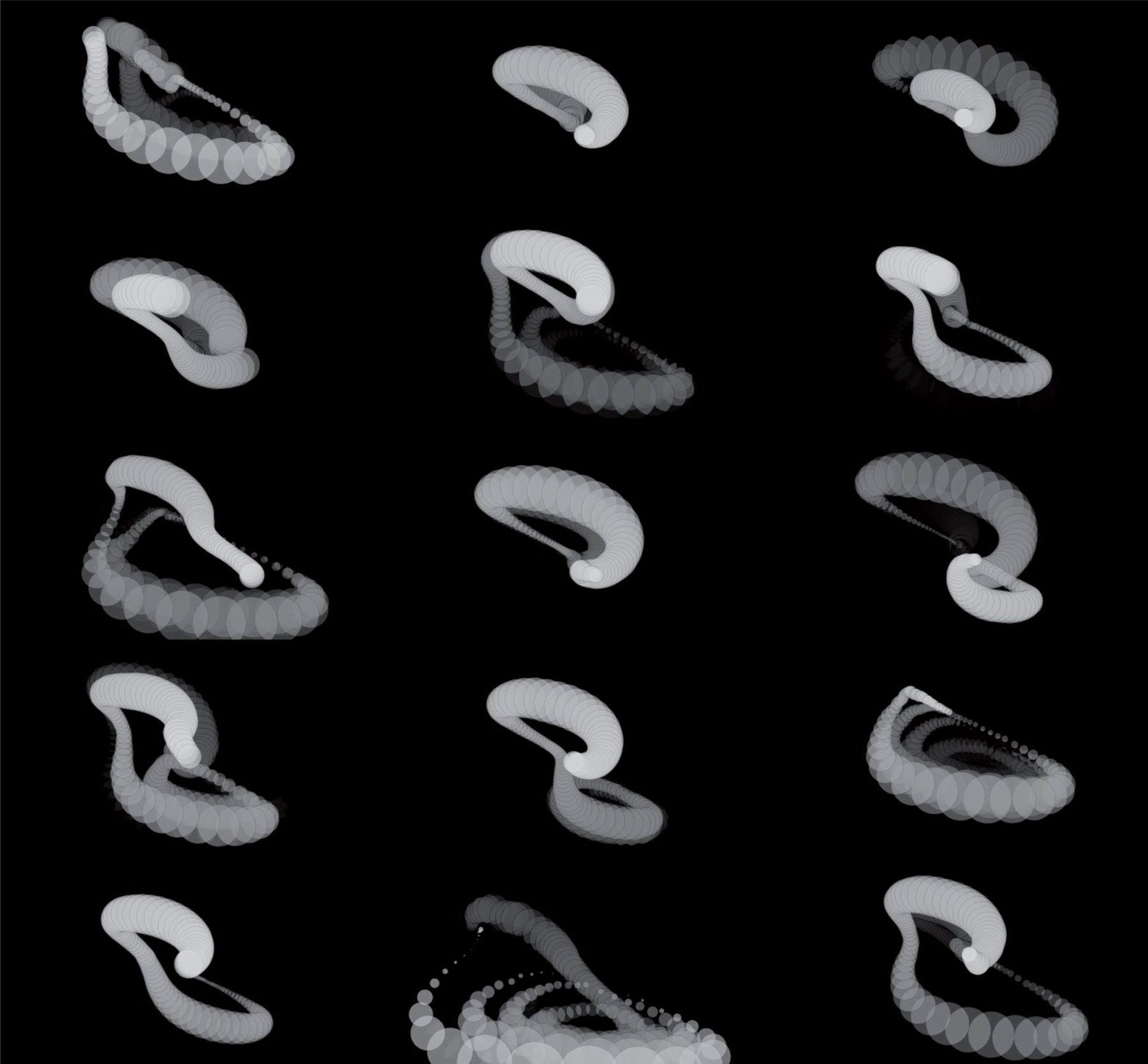
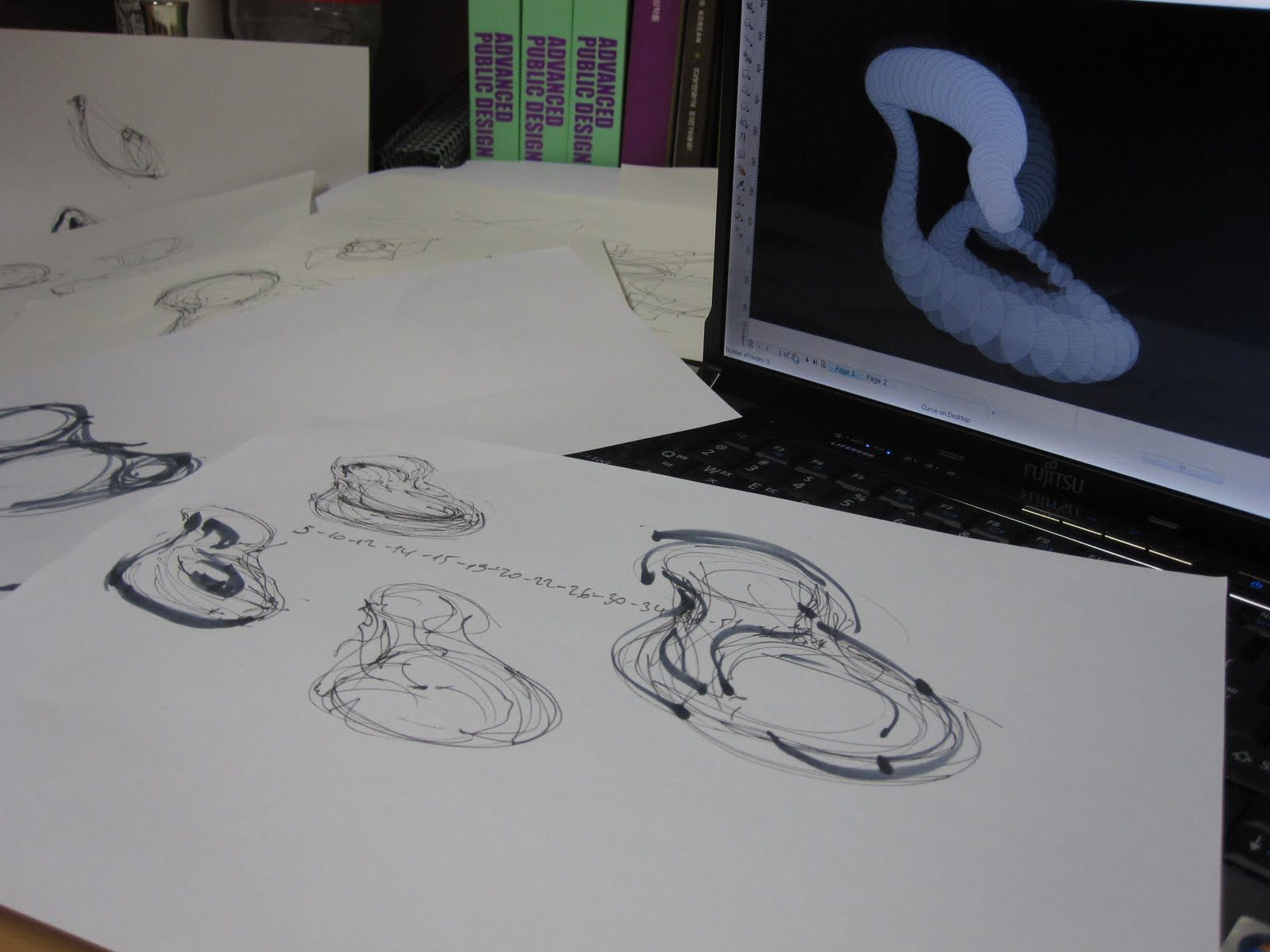
Form is not designed — it emerges. This project explores dynamic systems, particularly the Lorenz attractor, as generative engines capable of producing spatial and sculptural conditions. Equations are treated not as representations, but as operational structures.
Sound as Modulator
Sound is introduced as interference. Audio data alters the system in real time, creating a feedback loop where form becomes a direct expression of sonic behavior. Influenced by cymatics, invisible forces — frequency, vibration — become legible through geometry.
Early Generative Thinking
This work marks an early shift toward thinking in systems. Rather than producing objects, it establishes processes — simple rules capable of generating complex and unpredictable results. It anticipates later explorations in generative design, movement, and spatial systems.
Seed and Translation
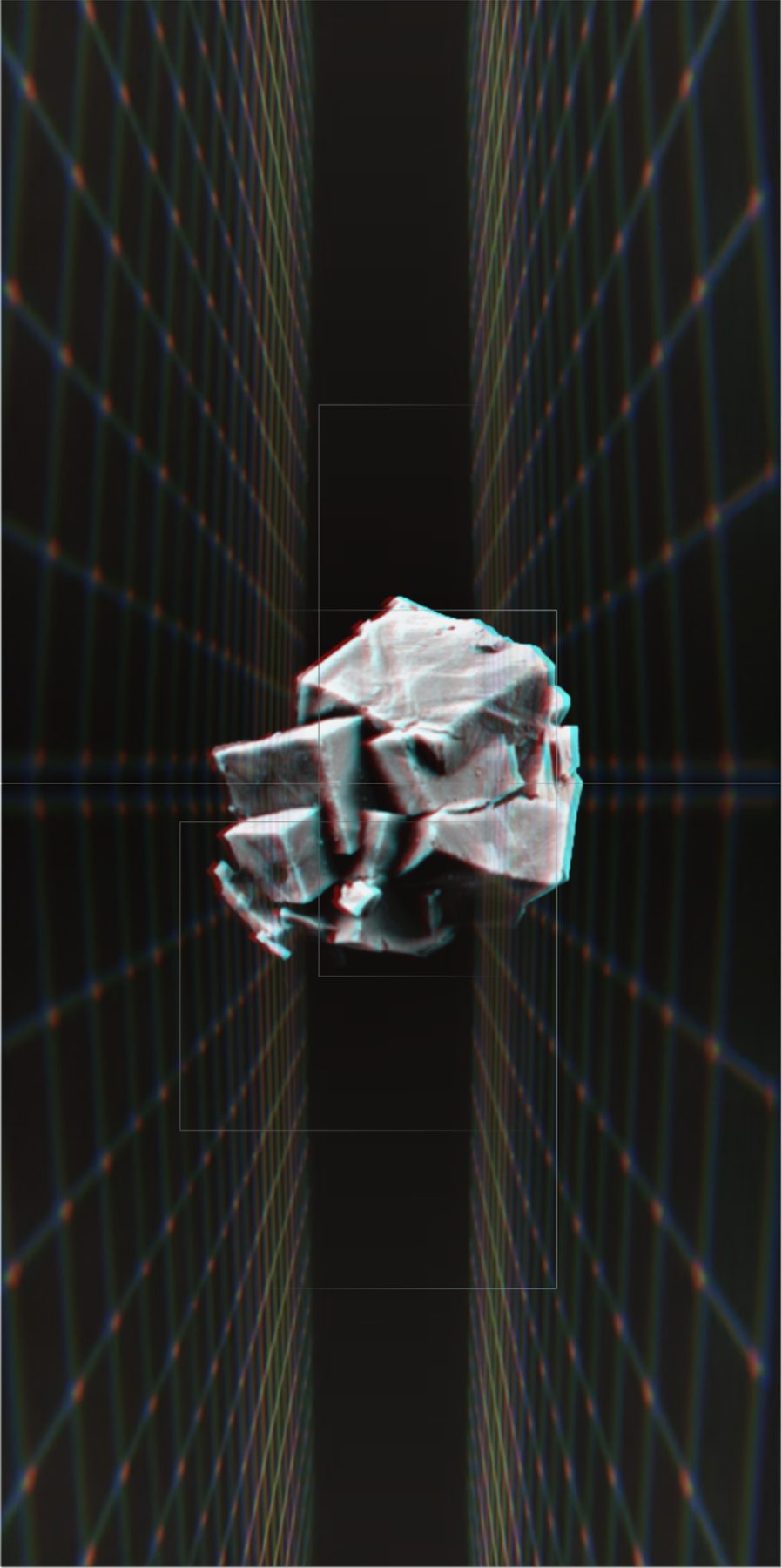
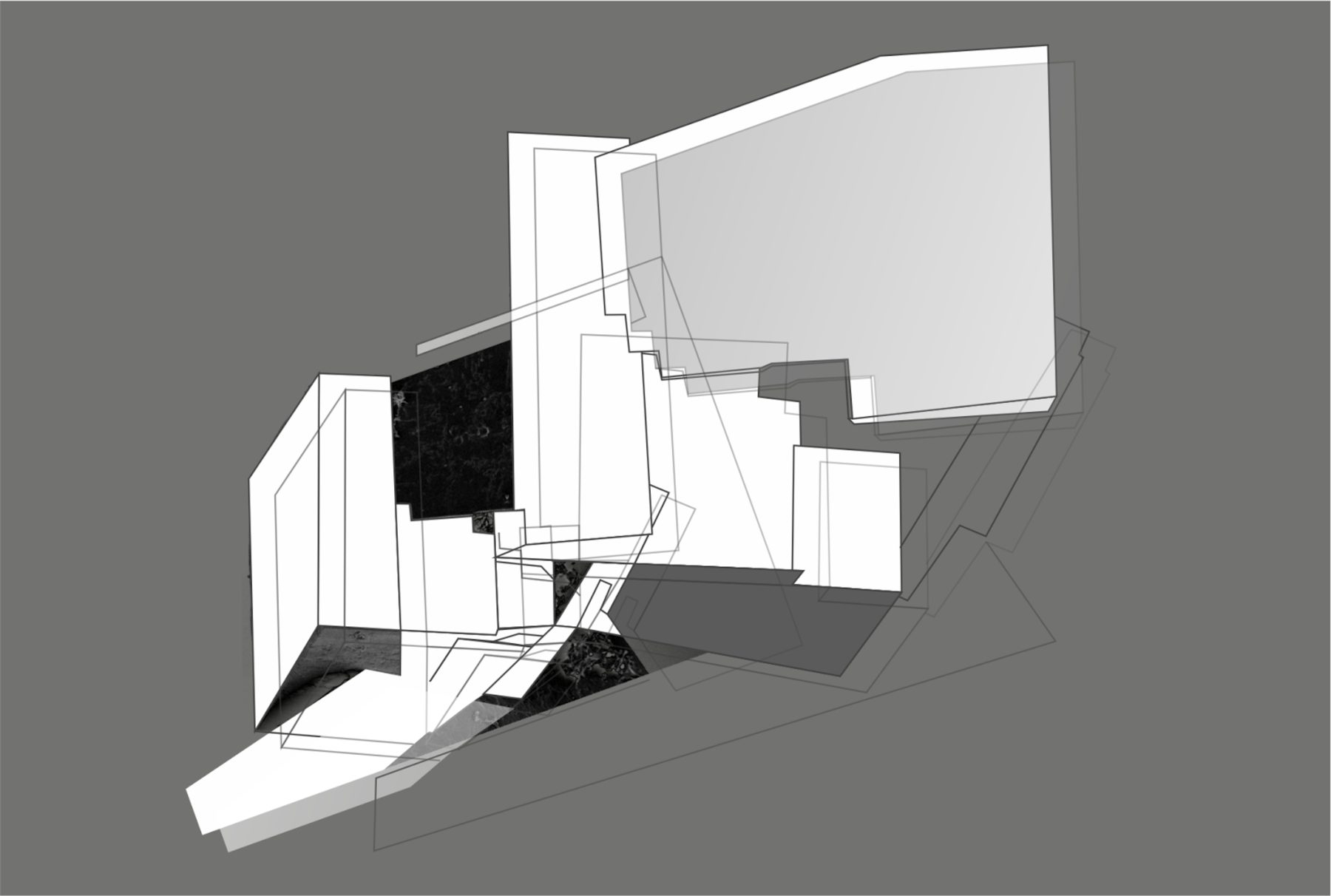
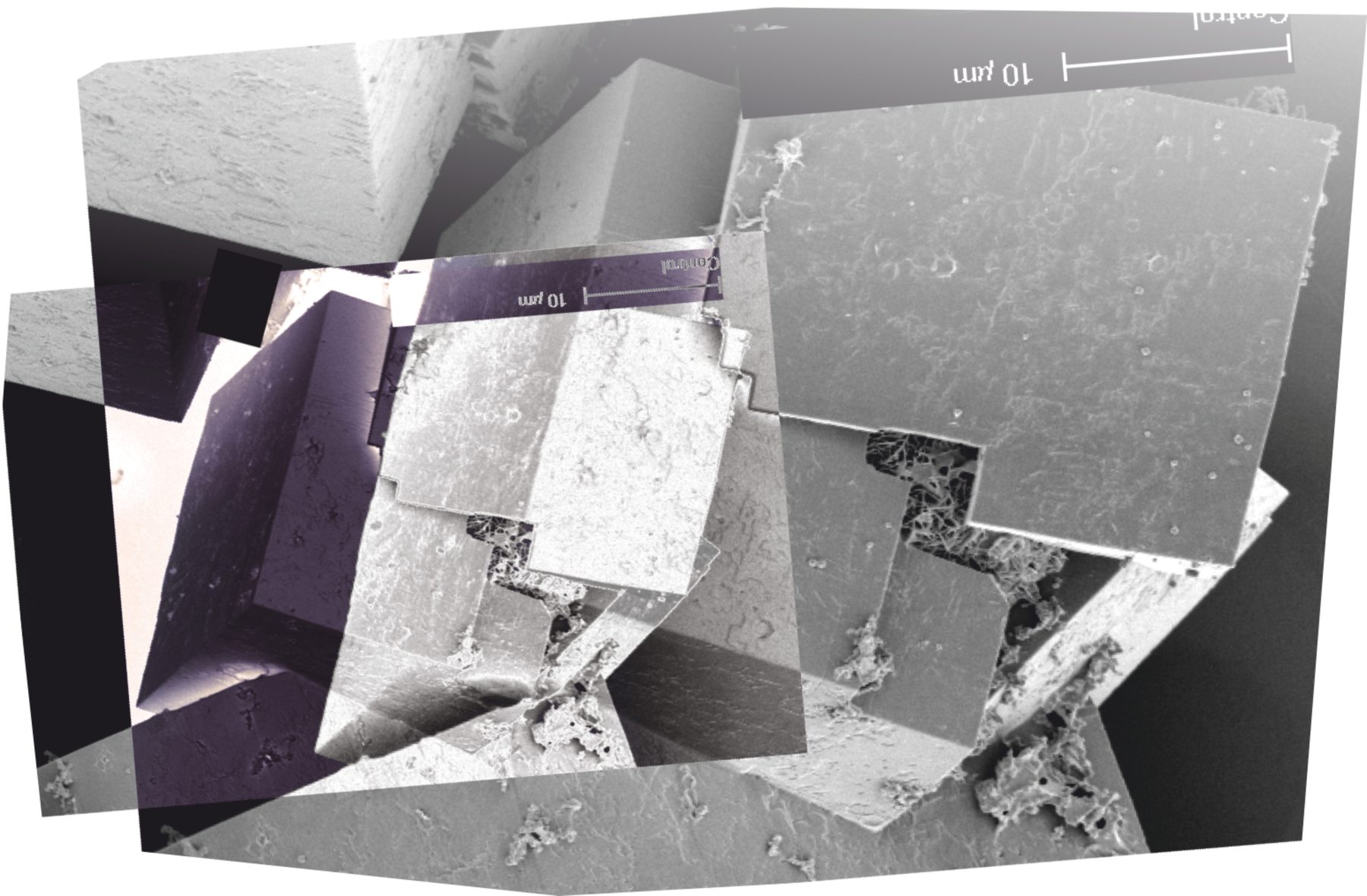
This project begins with the extraction of a spatial "seed" from a microscopic image. The image is not treated as representation, but as a latent condition — containing implicit geometries, relations, and internal logic. Through abstraction, this fragment is reconstructed into a geometric unit, preserving its underlying structure while becoming operable within a three-dimensional system.
System Formation
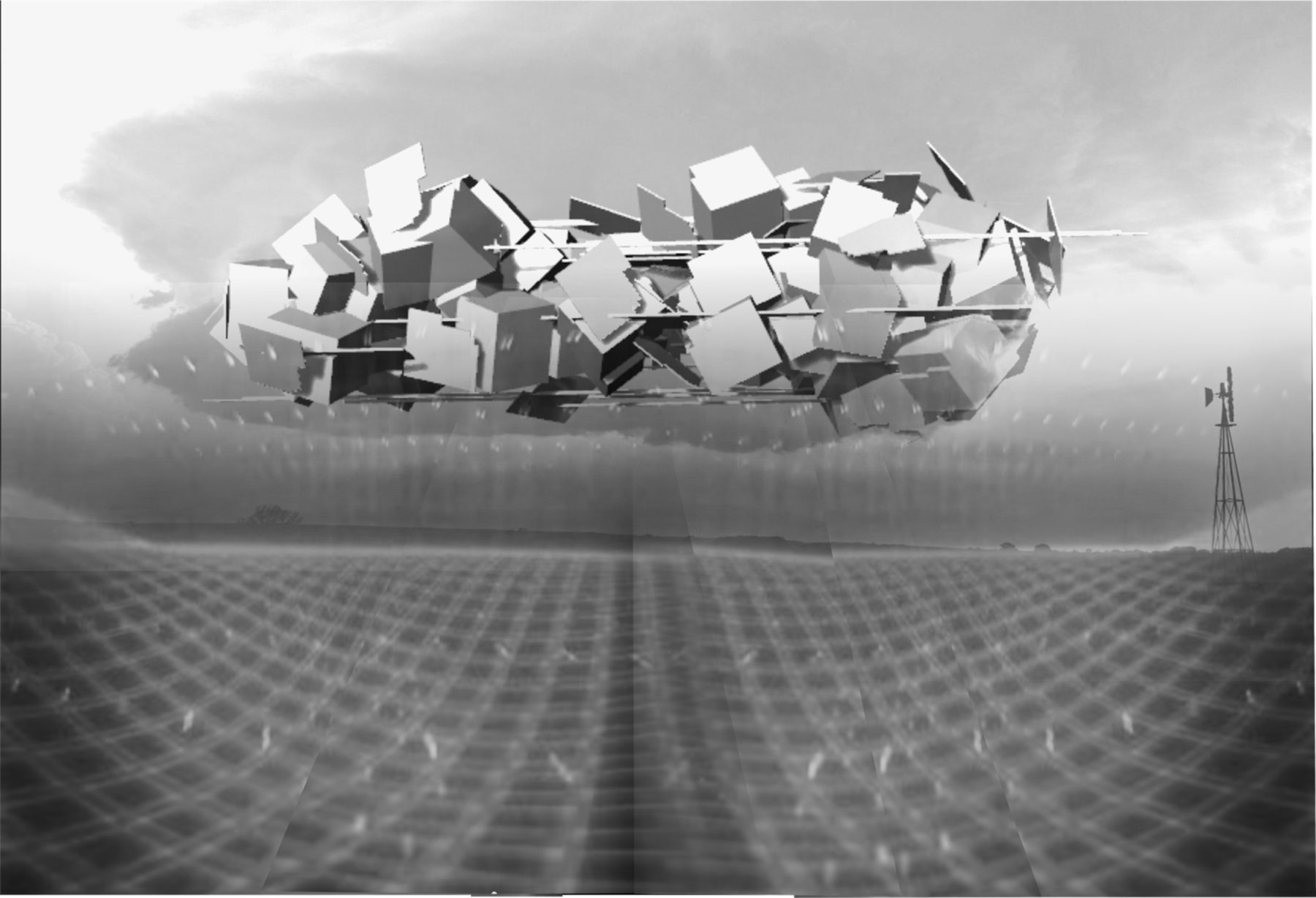
Once defined, the unit is iterated and aggregated. Repetition does not produce copies, but variation. Local interactions between units begin to establish a larger order, where the system evolves through accumulation. What starts as a fragment expands into a field.
Spatial Field
At its final stage, the system operates between object and environment. Individual units lose their autonomy, dissolving into a continuous formation. Identity is no longer located in a single element, but in the relations between many — anticipating later work on spatial systems and micro-architectural thinking.
Body as Interface
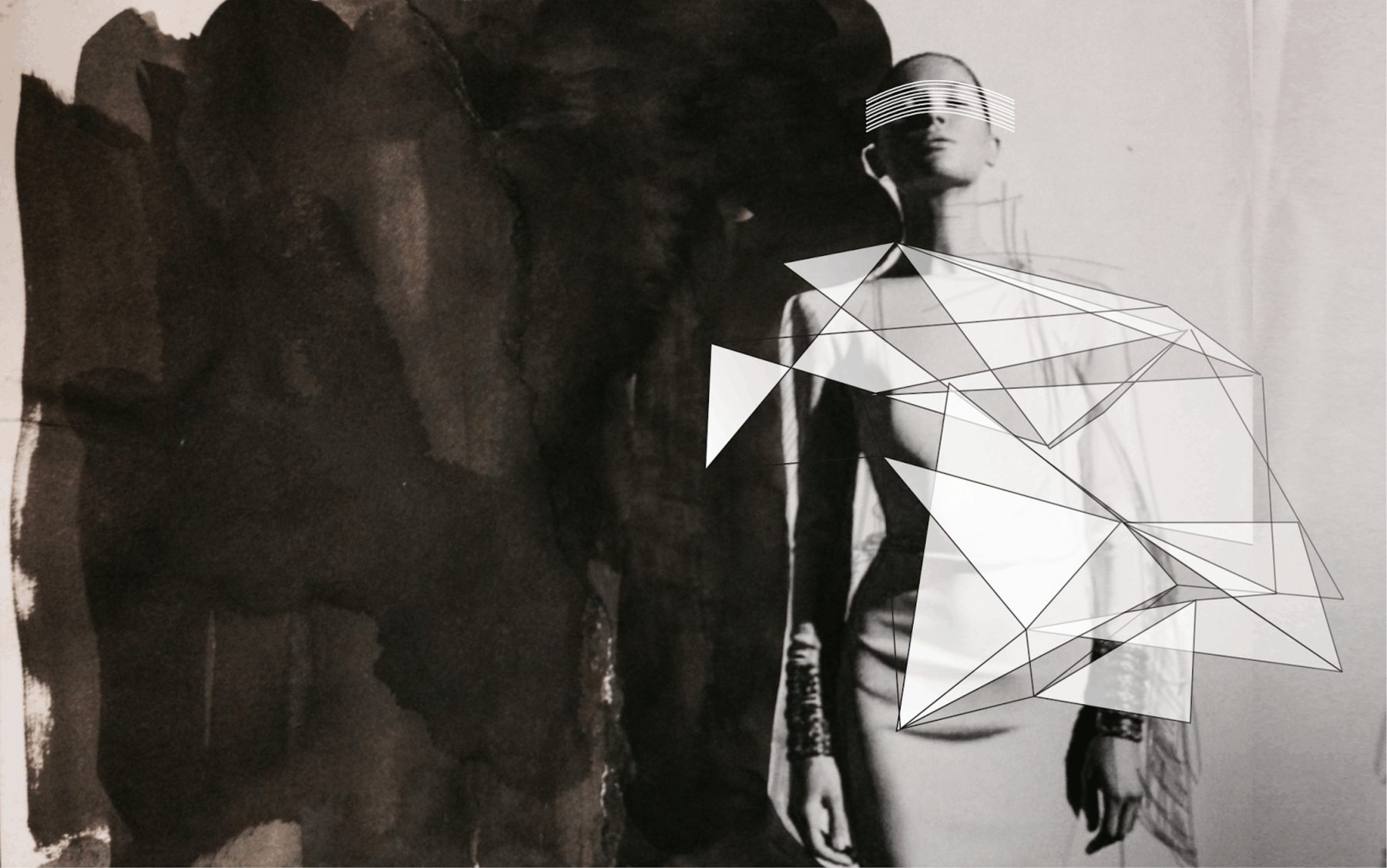
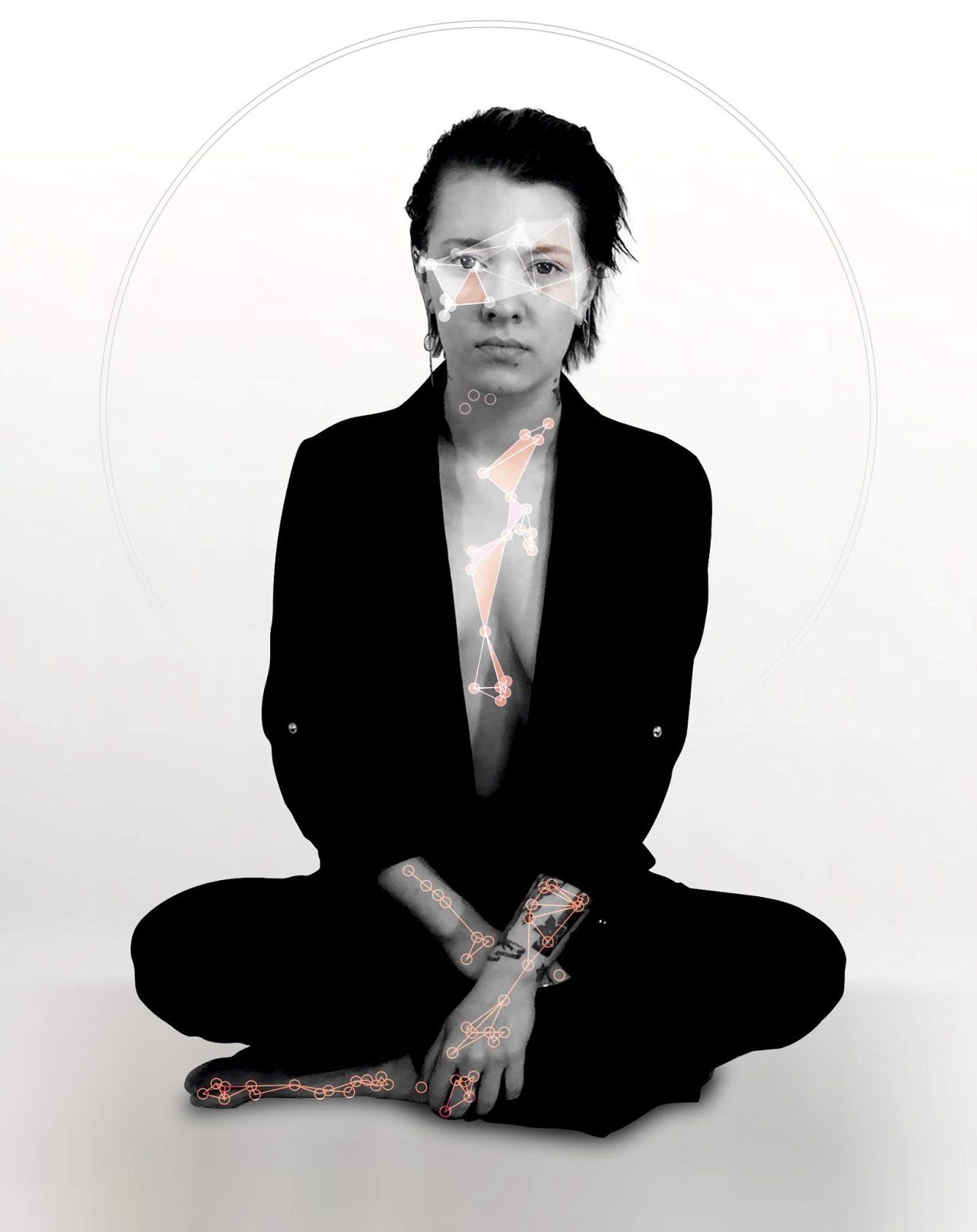
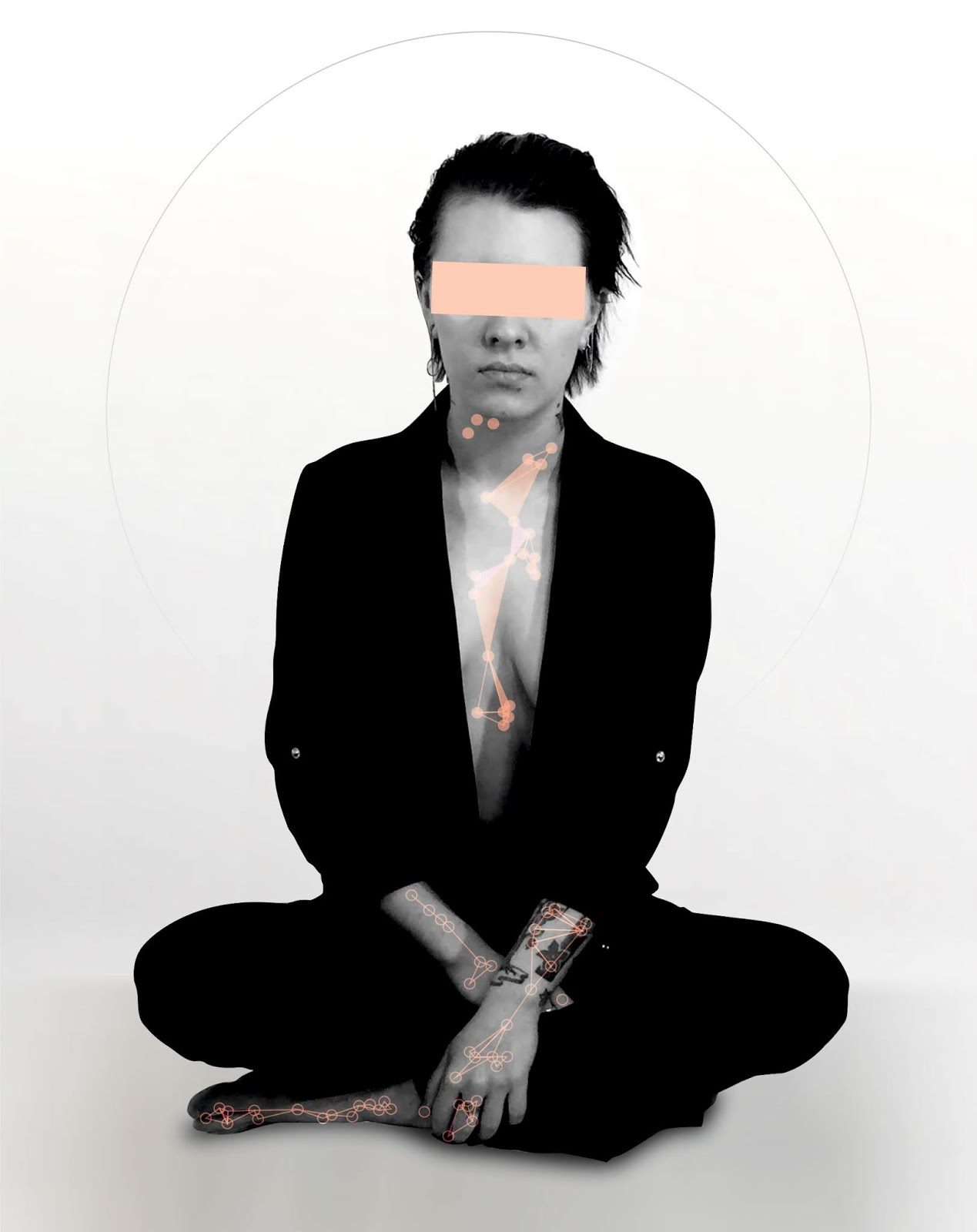
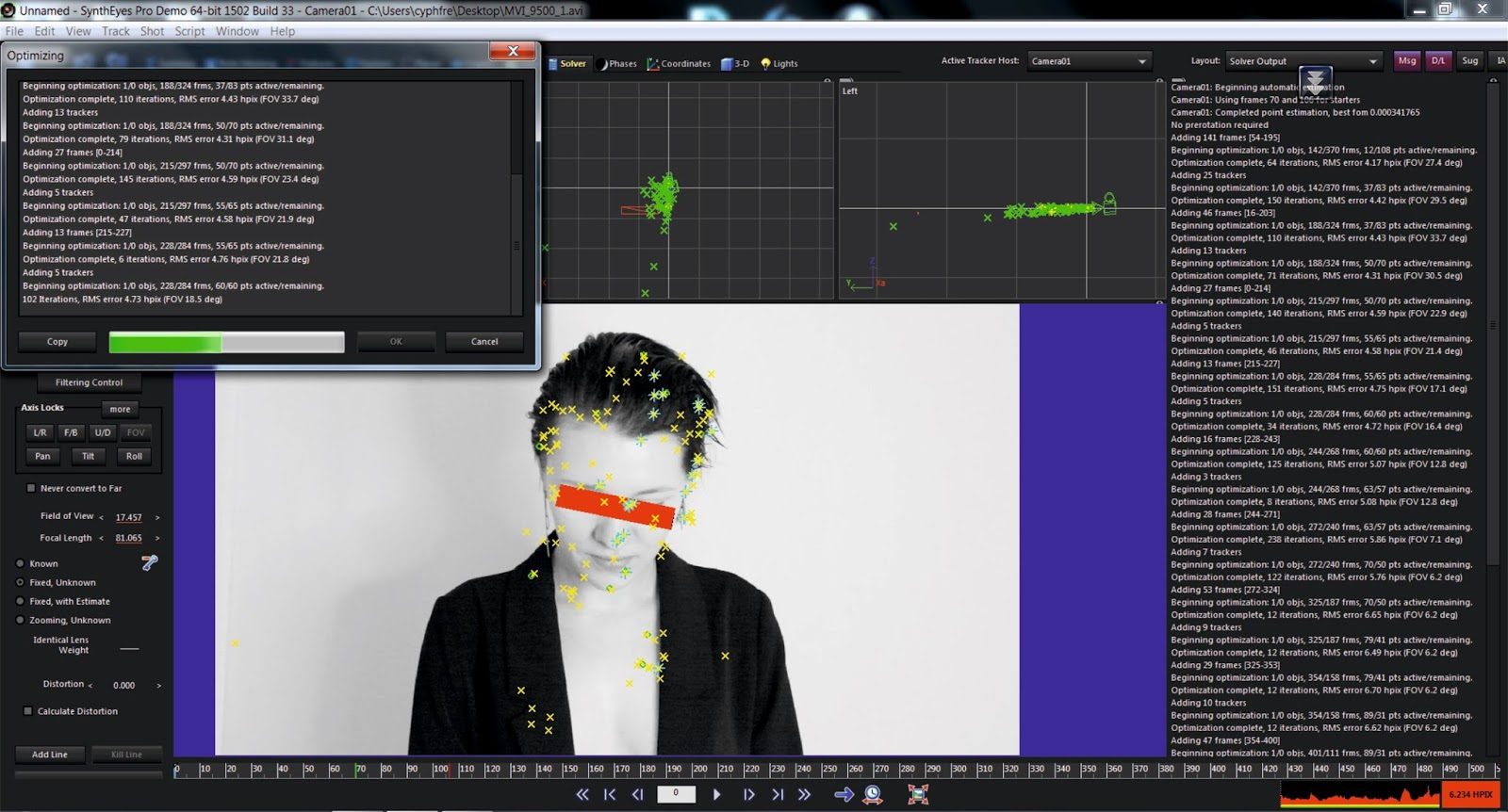
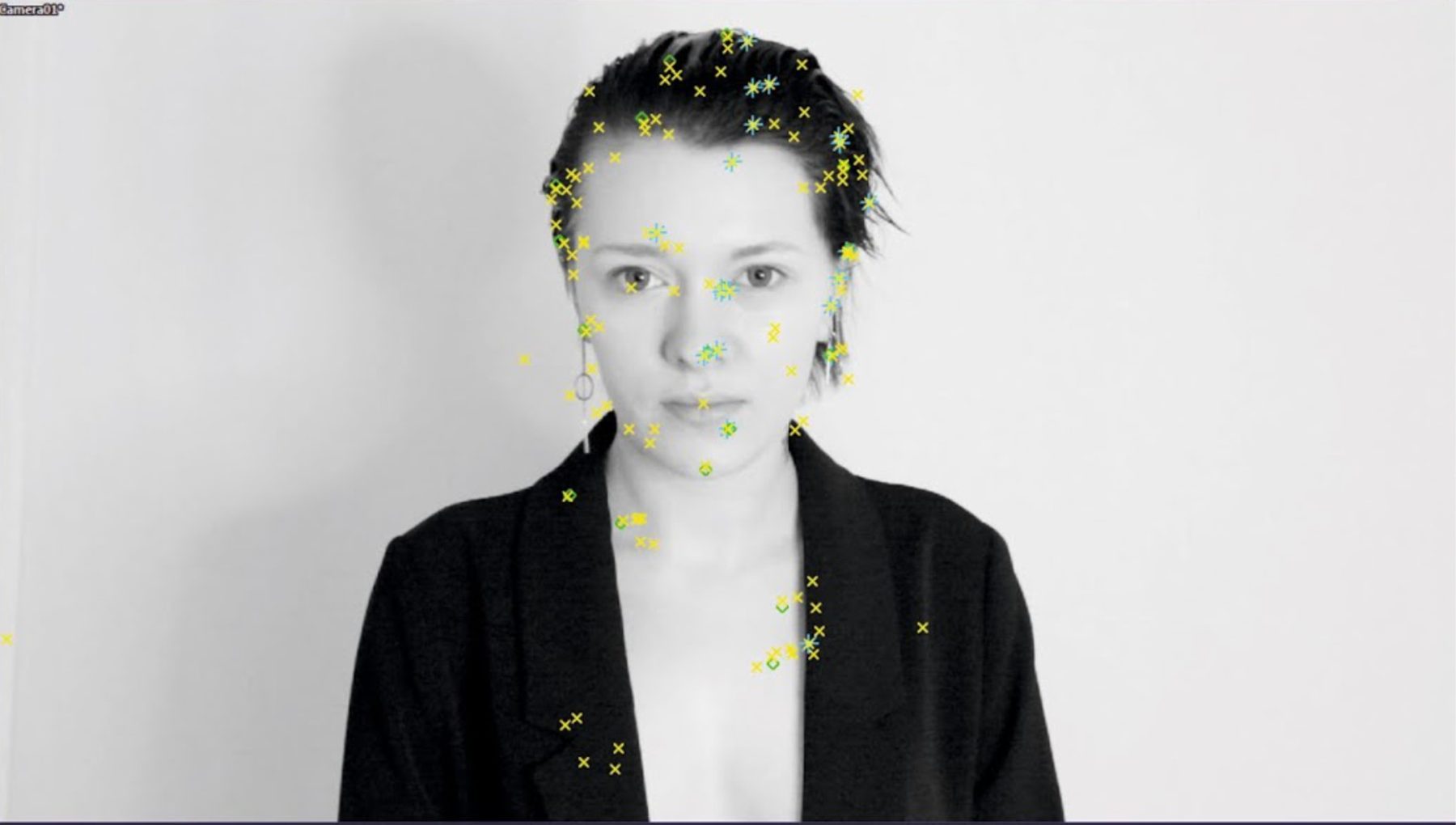
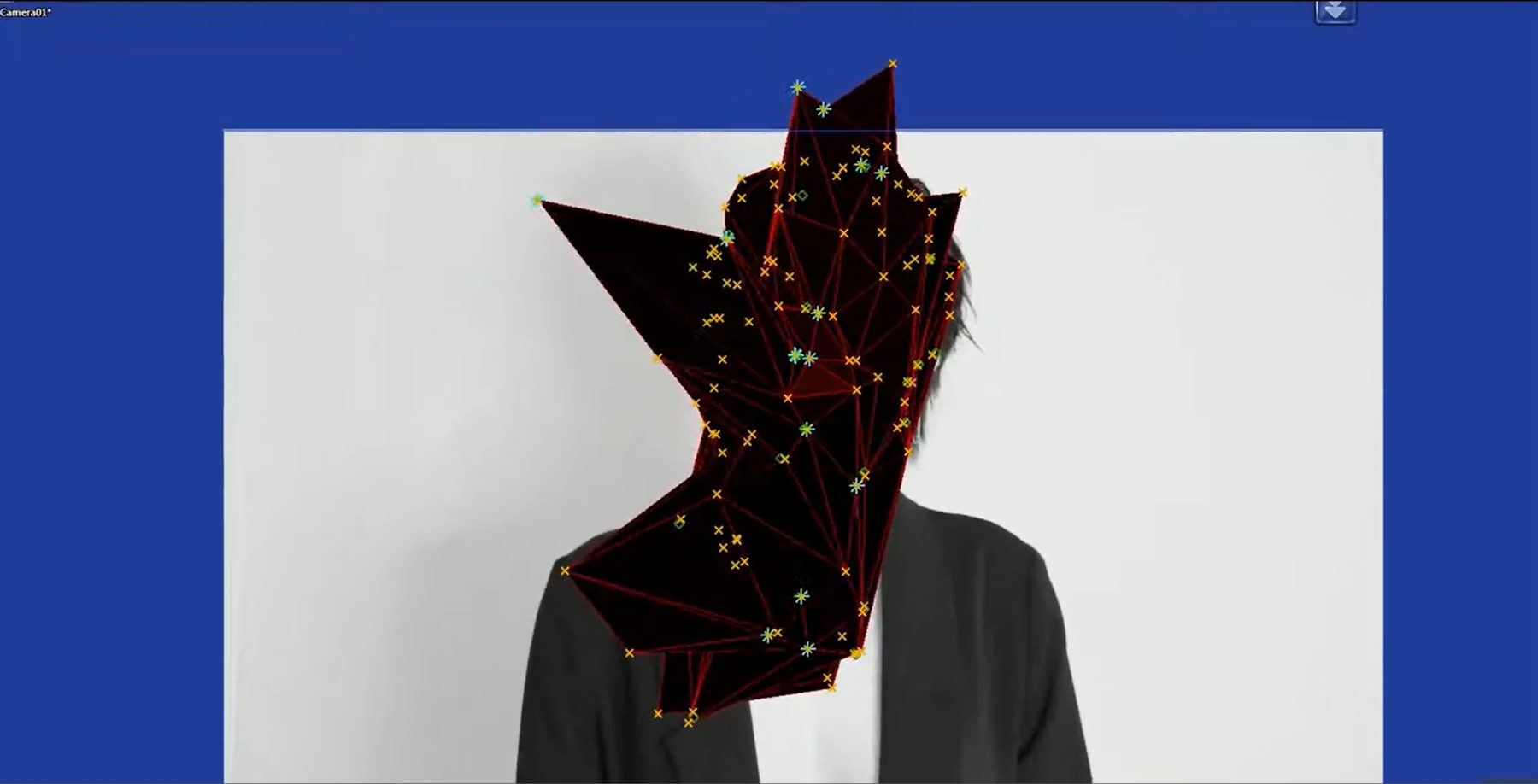
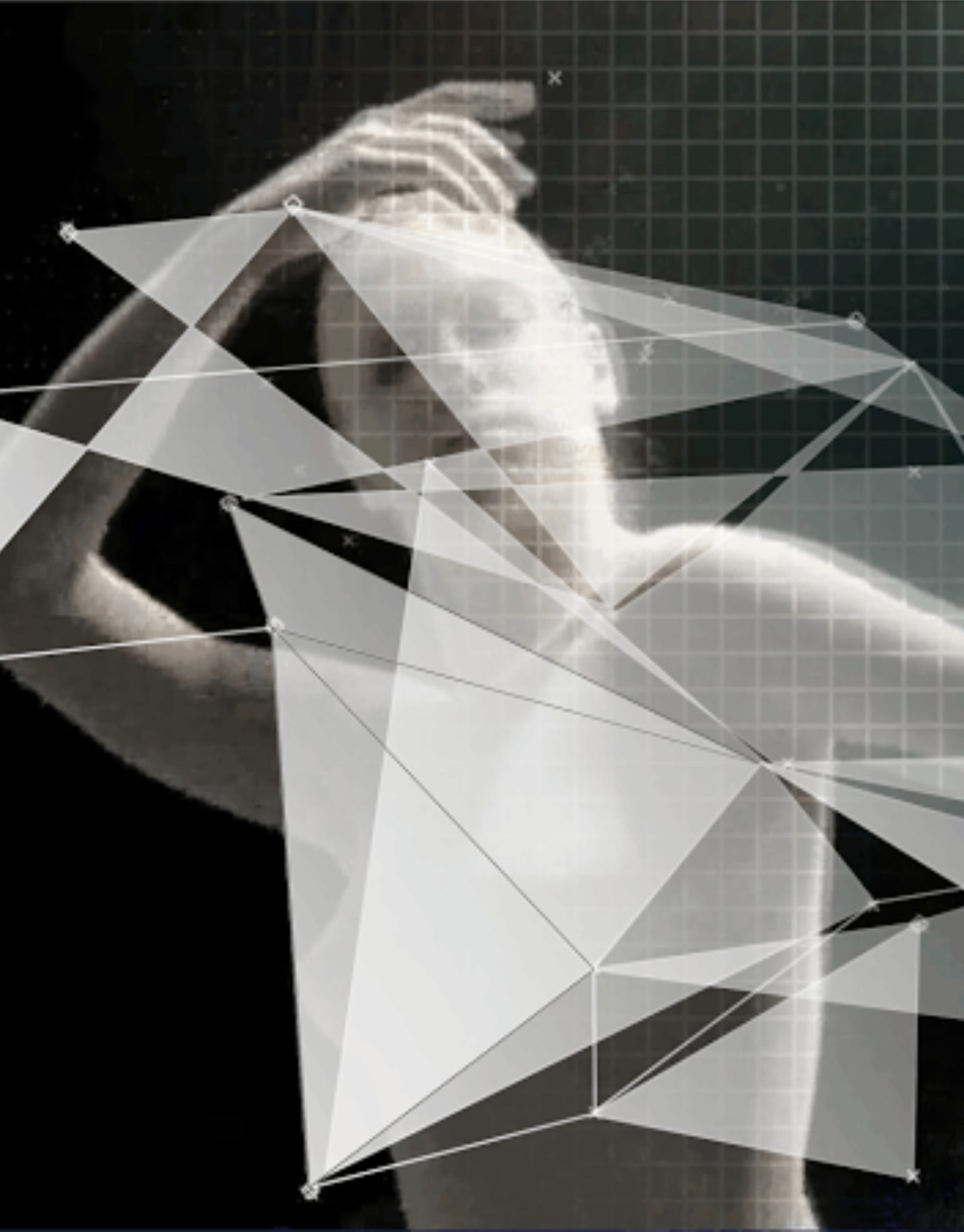
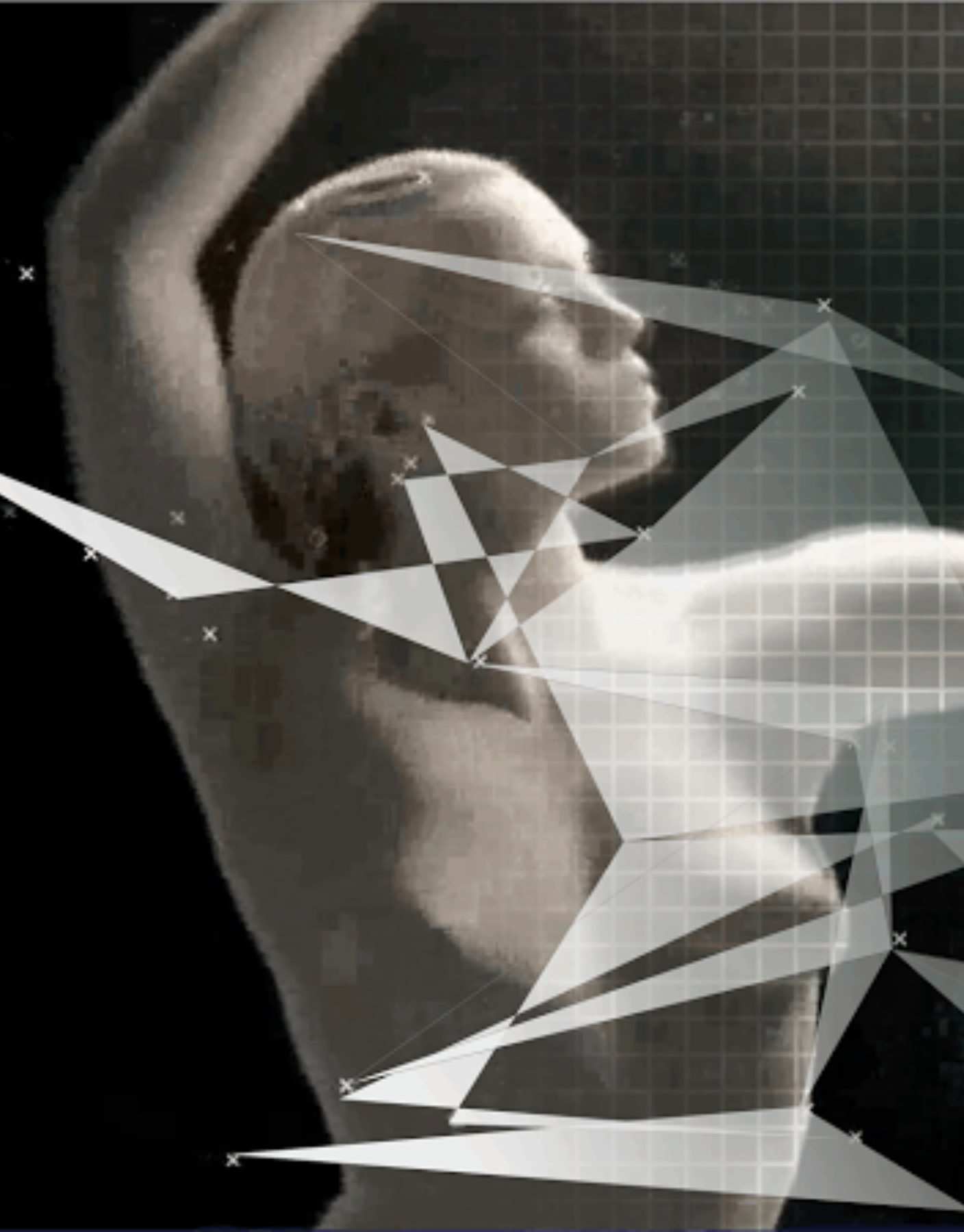
The body becomes a coordinate system. Using motion tracking software, key anatomical points are mapped across the face and torso, constructing a spatial network that translates posture and proportion into geometry. Form is not applied to the body — it is extracted from it.
From Tracking to Form
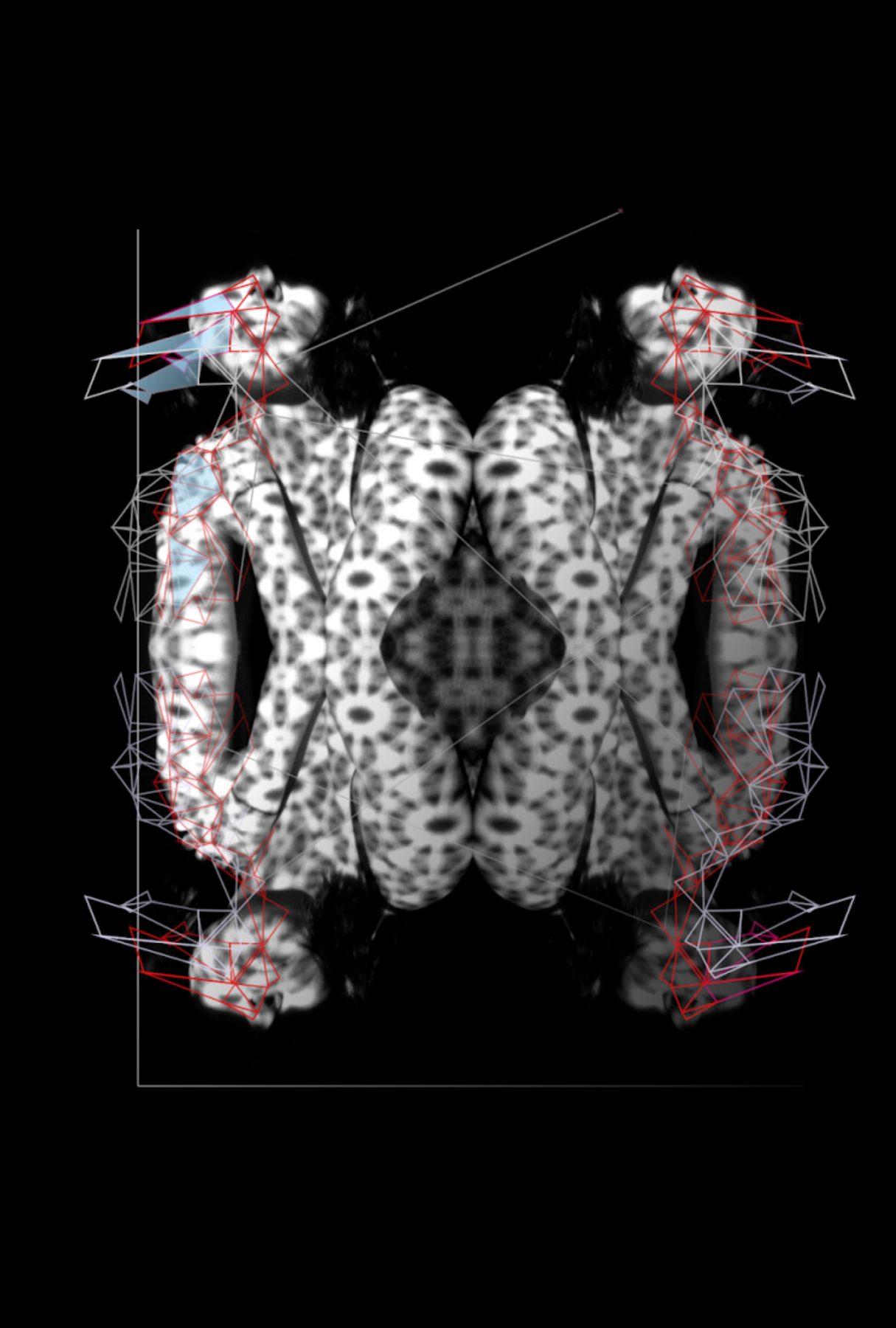
Connections between tracked points produce polygonal structures — digital formations that behave like responsive surfaces. These geometries shift with the body, continuously reconfiguring in relation to movement and orientation. The underlying system remains stable even as form changes.
Toward Generative Wearables
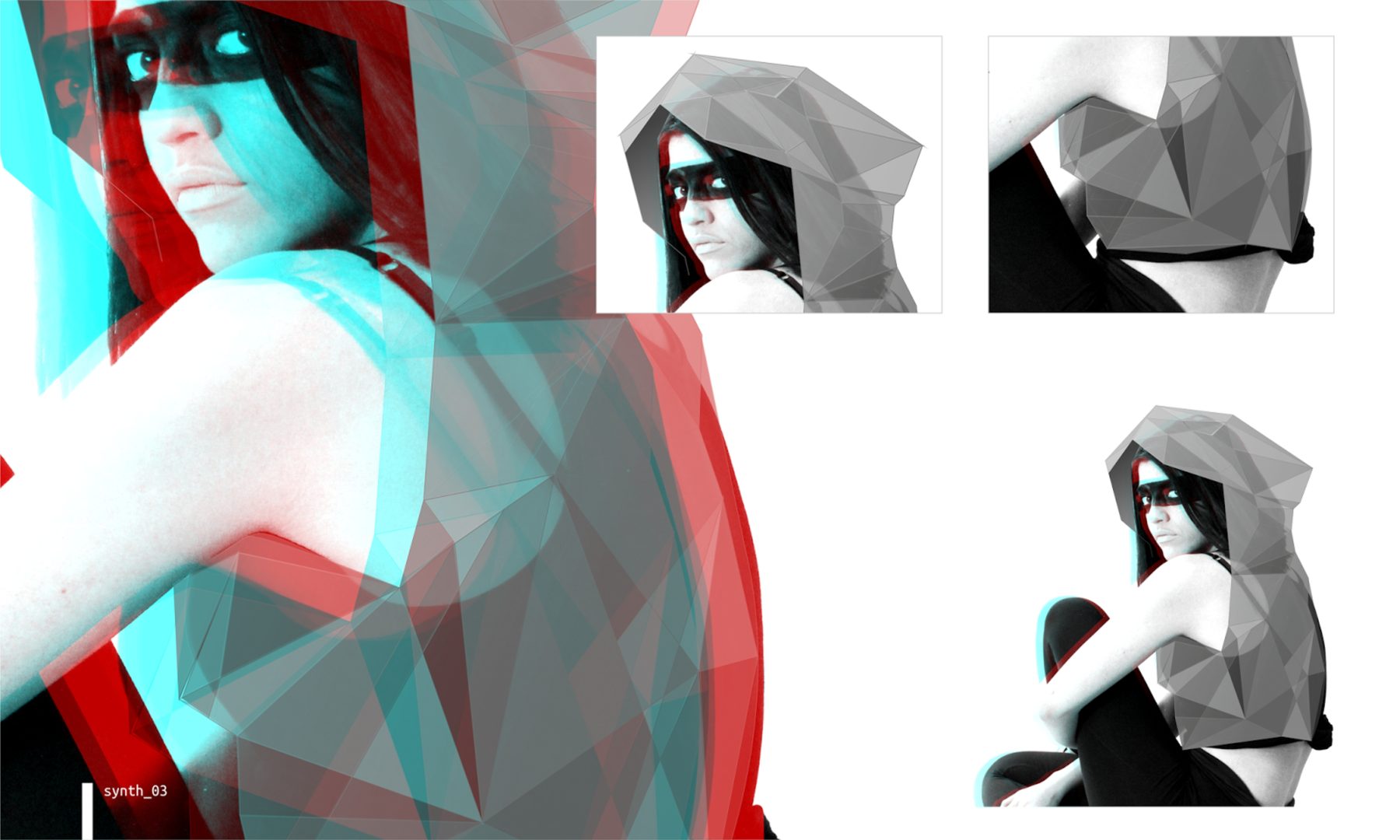
The project extends into augmented reality and movement-driven clothing. Form becomes temporal, shaped by light, motion, and interaction. What emerges is not a fixed garment but a system — capable of producing multiple visual states from a single generative logic.
Pose as Blueprint
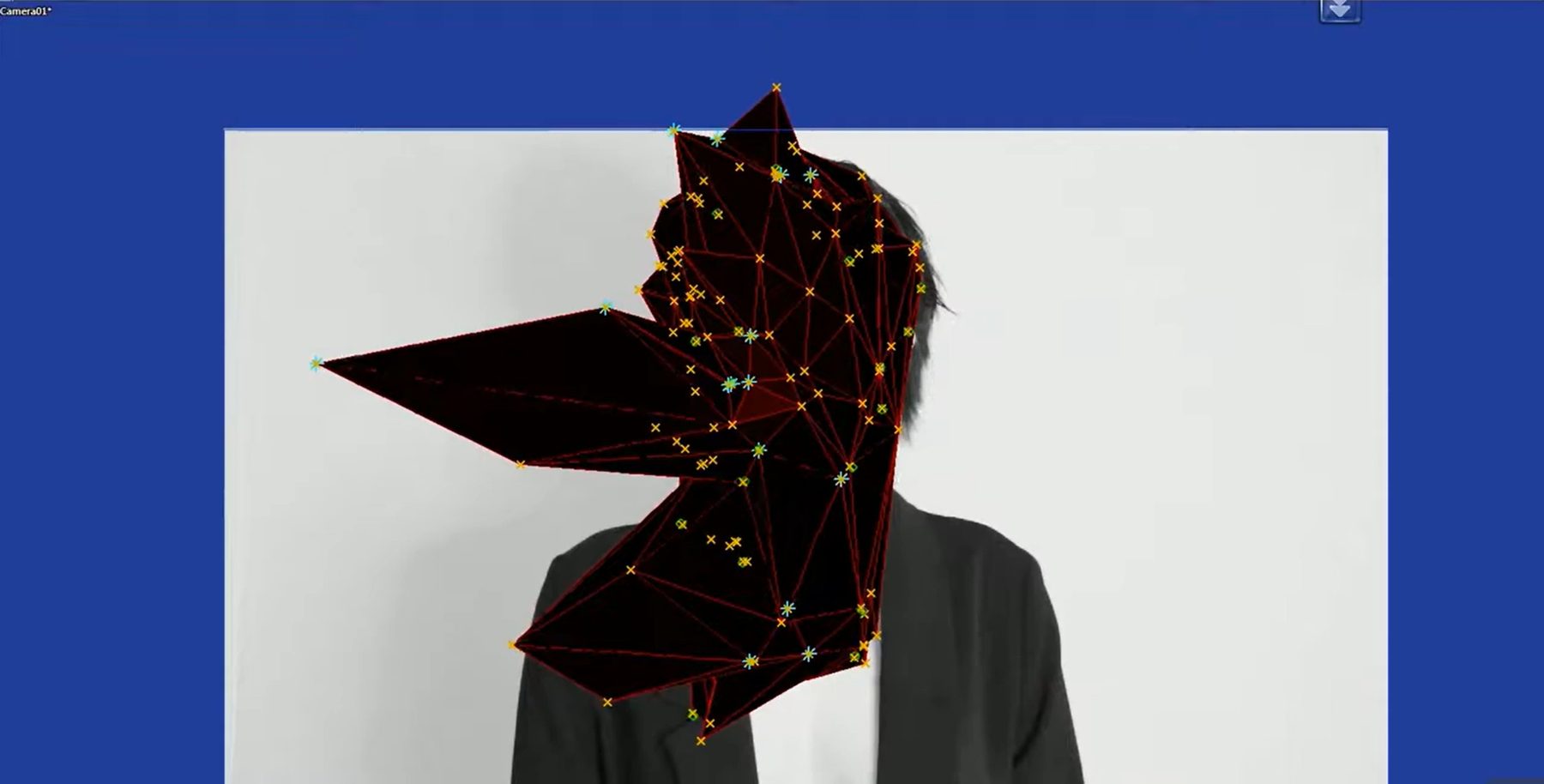
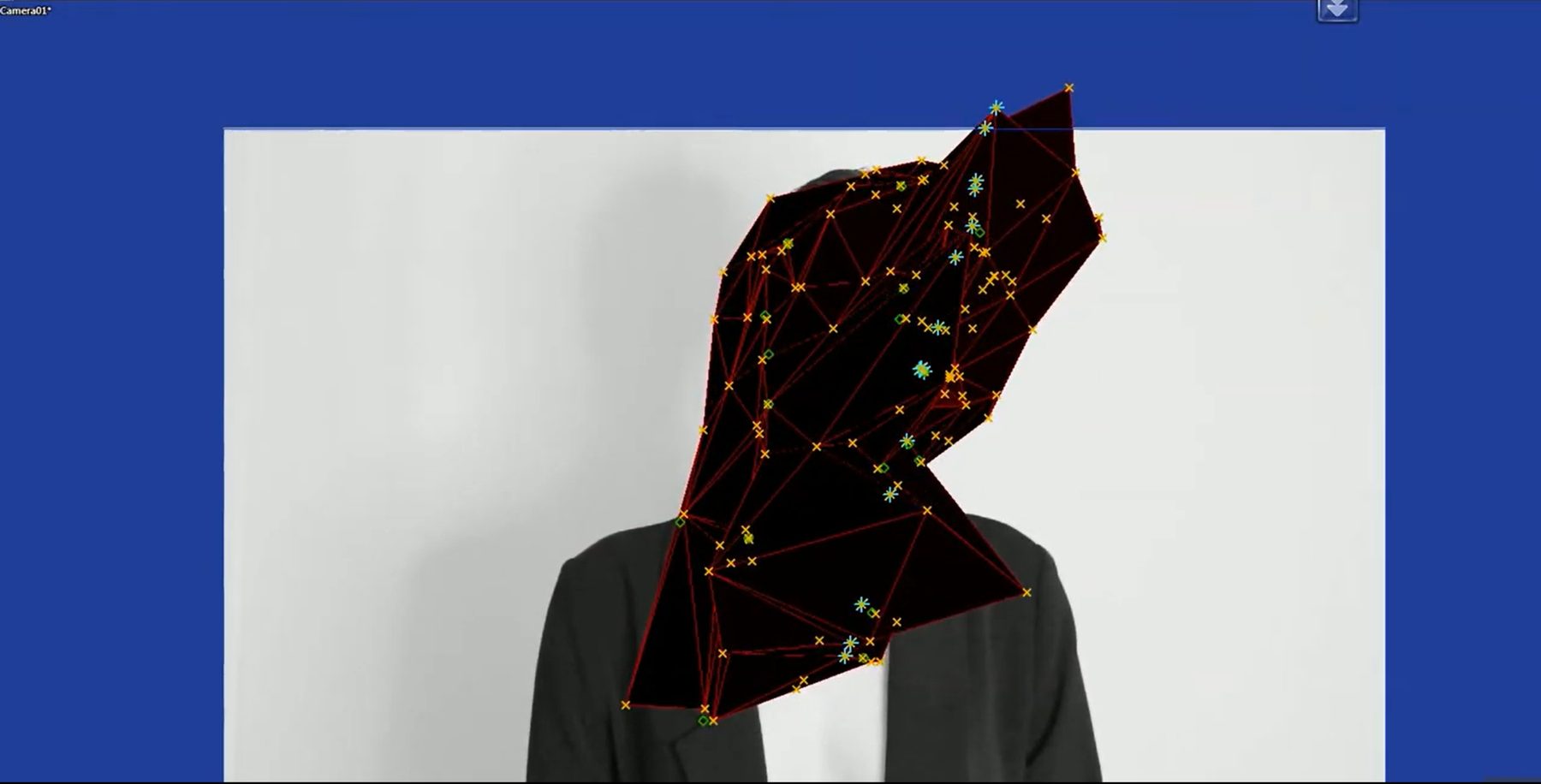
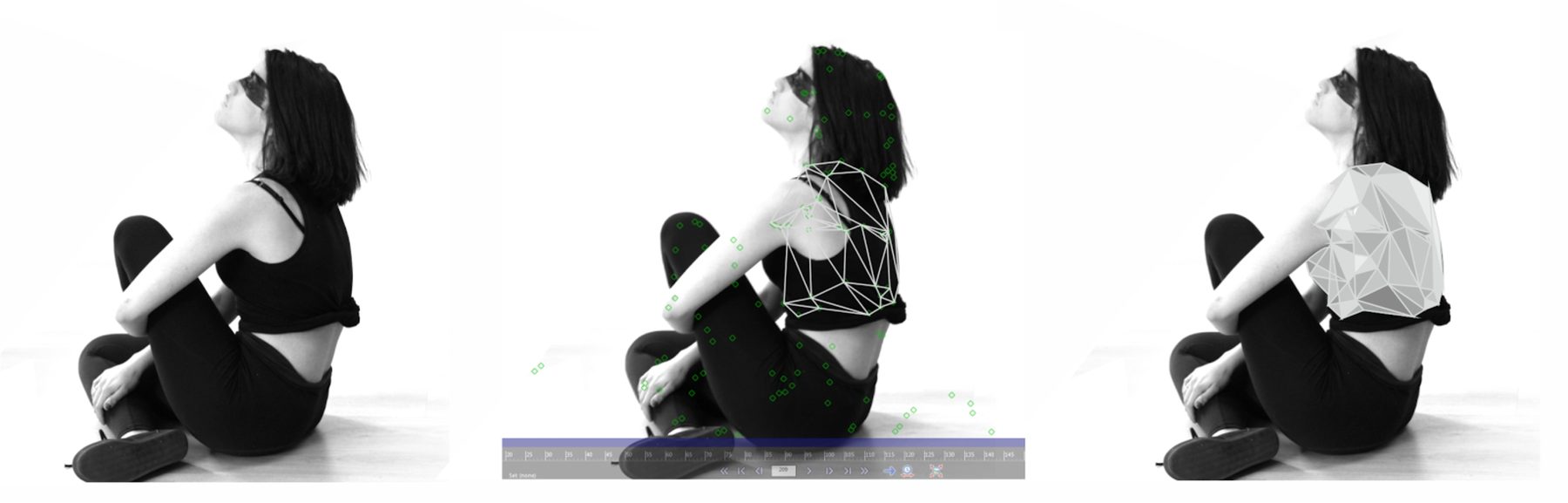
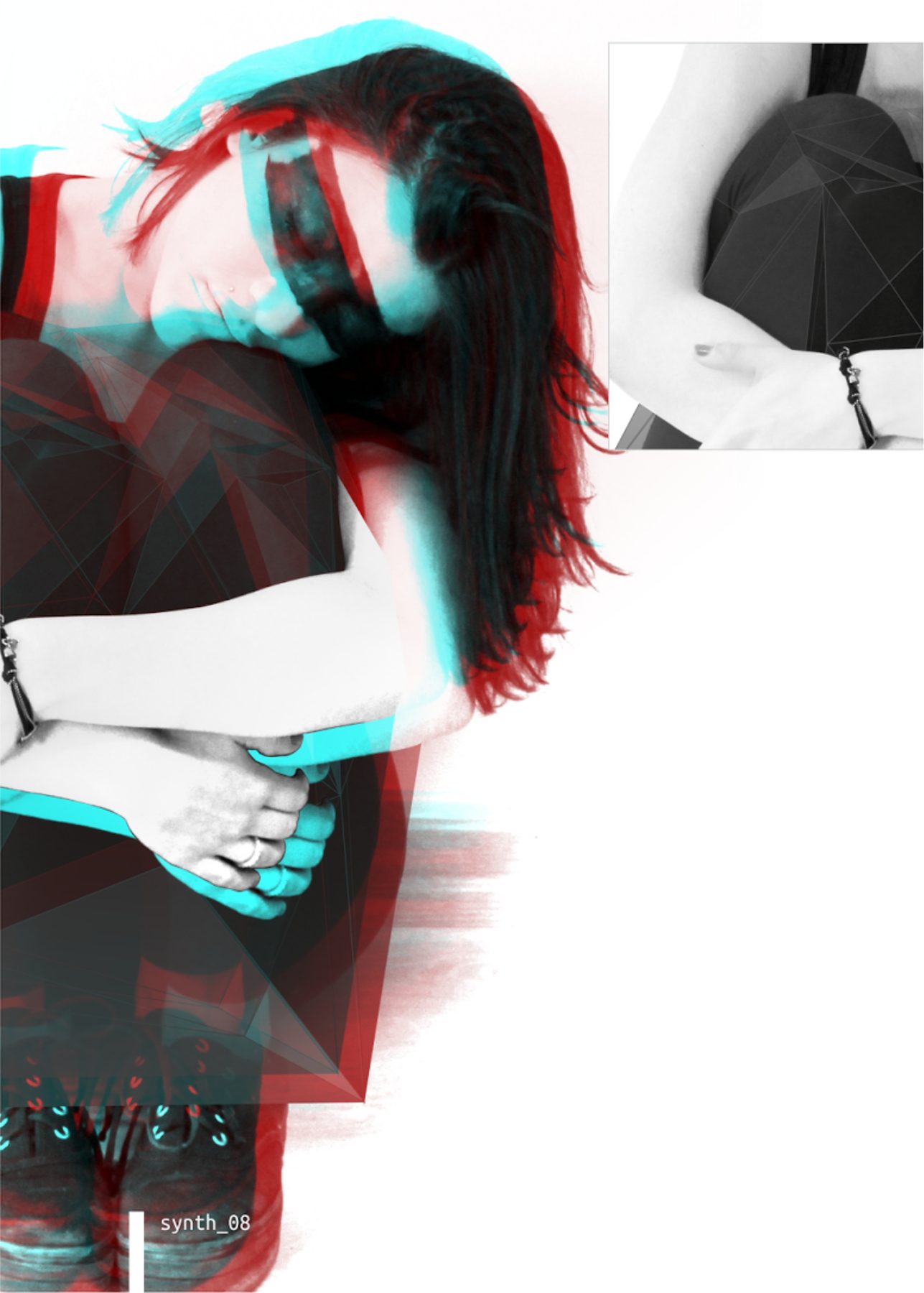
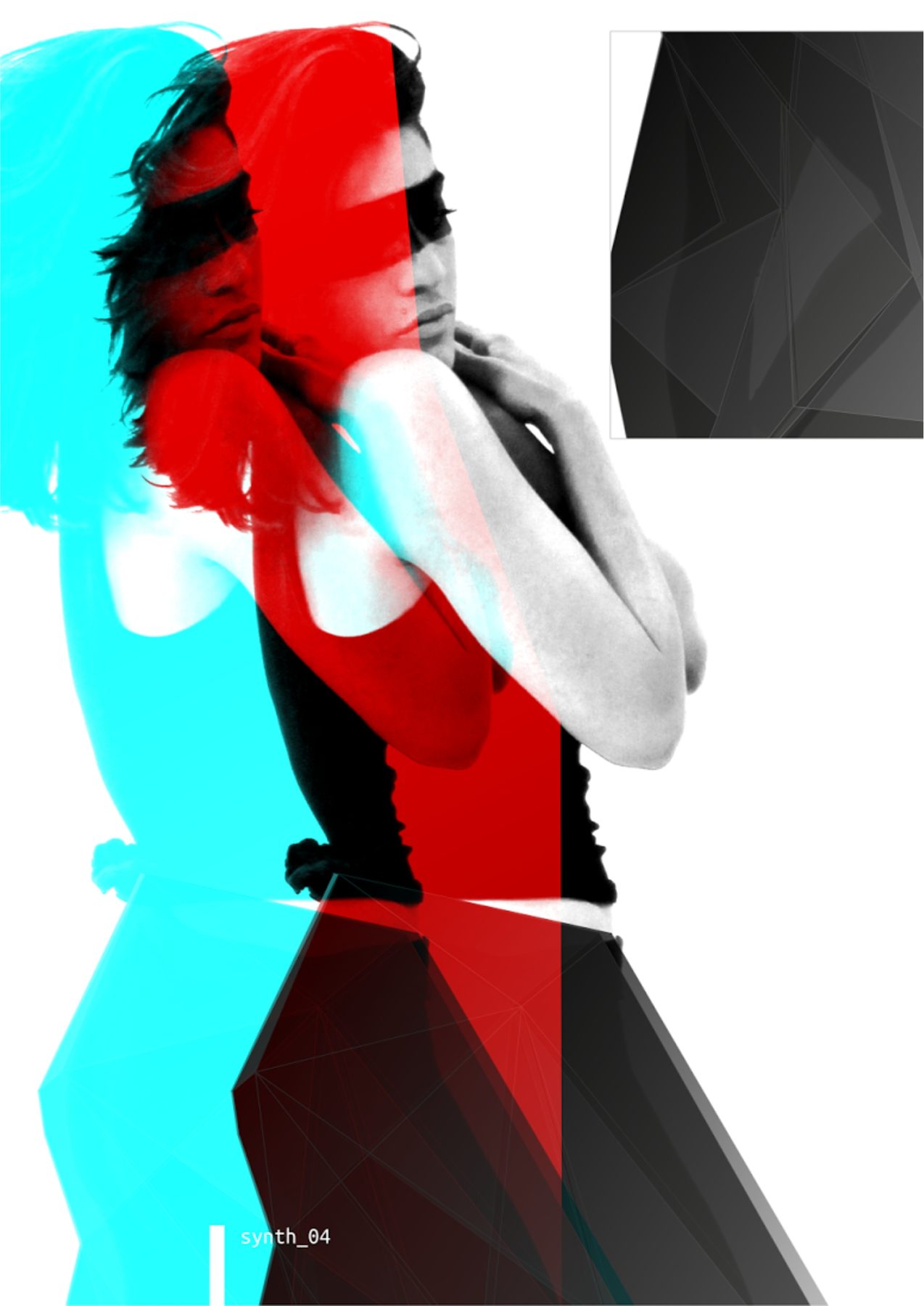
The body is photographed in a series of static poses. Each image is then processed through motion tracking software, generating a cloud of spatial points anchored to the body's surface. The photograph is not a document — it becomes a dataset.
From Points to Pattern
These point networks are connected into polygonal structures that follow the body's contour, proportion, and gesture. Each pose produces a distinct geometric configuration — a unique formal condition derived from a specific bodily state. The body does not wear the design; it generates it.
Collection as System
Rather than designing individual pieces, the project produces a collection through a single generative method applied to different poses. Each garment originates from a different body position, yet all share the same underlying logic — a fashion system where the body is the source of every formal decision.
From Still to Moving
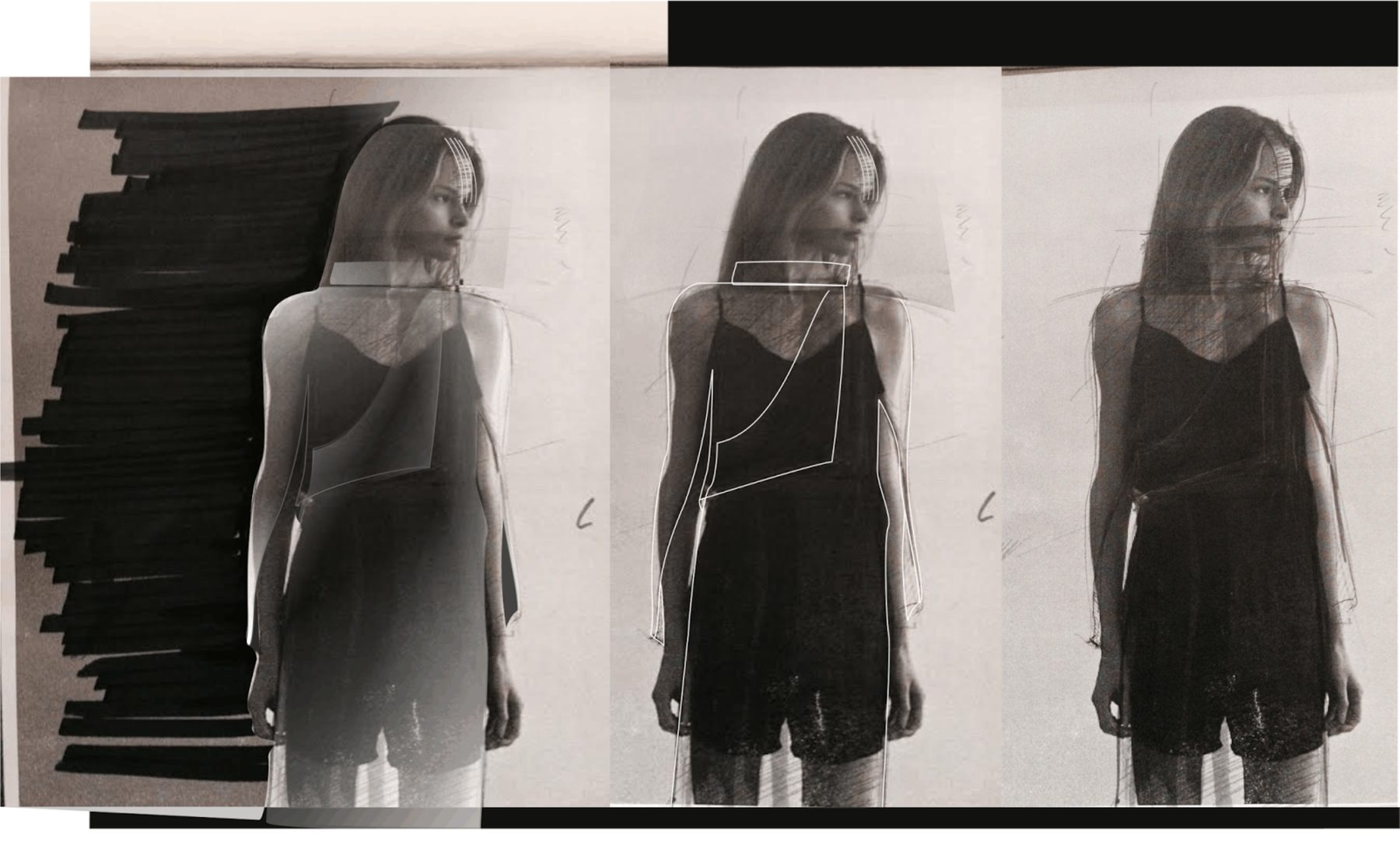
Where Synth I worked from static photographs, this project introduces the moving body as its generative source. A dancer's motion is captured in real time, producing a continuously shifting dataset of spatial coordinates. The body is no longer frozen into a single design — it becomes a live instrument.
Time as Material
Movement introduces time as a design variable. As the body shifts, the geometry evolves — form appears, transforms, and dissolves in direct response to motion. No two moments produce the same configuration. What is designed is not an object, but a temporal condition rendered through augmented reality.
Fashion Beyond the Fixed
The garment ceases to exist as a static artifact. Instead, it operates as a real-time projection — a responsive surface whose visual identity is continuously authored by the wearer's movement. Identity is no longer embedded in form, but in its capacity to change.